3 Lessons From My Recent DEXA Scan

About a month ago, at the pool, my 11-year-old looked at me and said I needed to “work on my abs.”
Little 💩.
I took it as quiet motivation (aka spite) to clean up my diet and crank up the training intensity.
Fast-forward a month—down 7–8 lbs, feeling leaner—so I went to my friends at LiveLeanRx for a DEXA scan (drop my name for a discount).
Here are 3 lessons I learned from those results.
ACCURACY
In the past, I recommended that people find a gym/business that has an InBody machine to analyze body fat percentage. Part of that was because until just this year, there were no direct-to-public options to get a DEXA scan. It was the next best option. I have used InBody many times over the years.
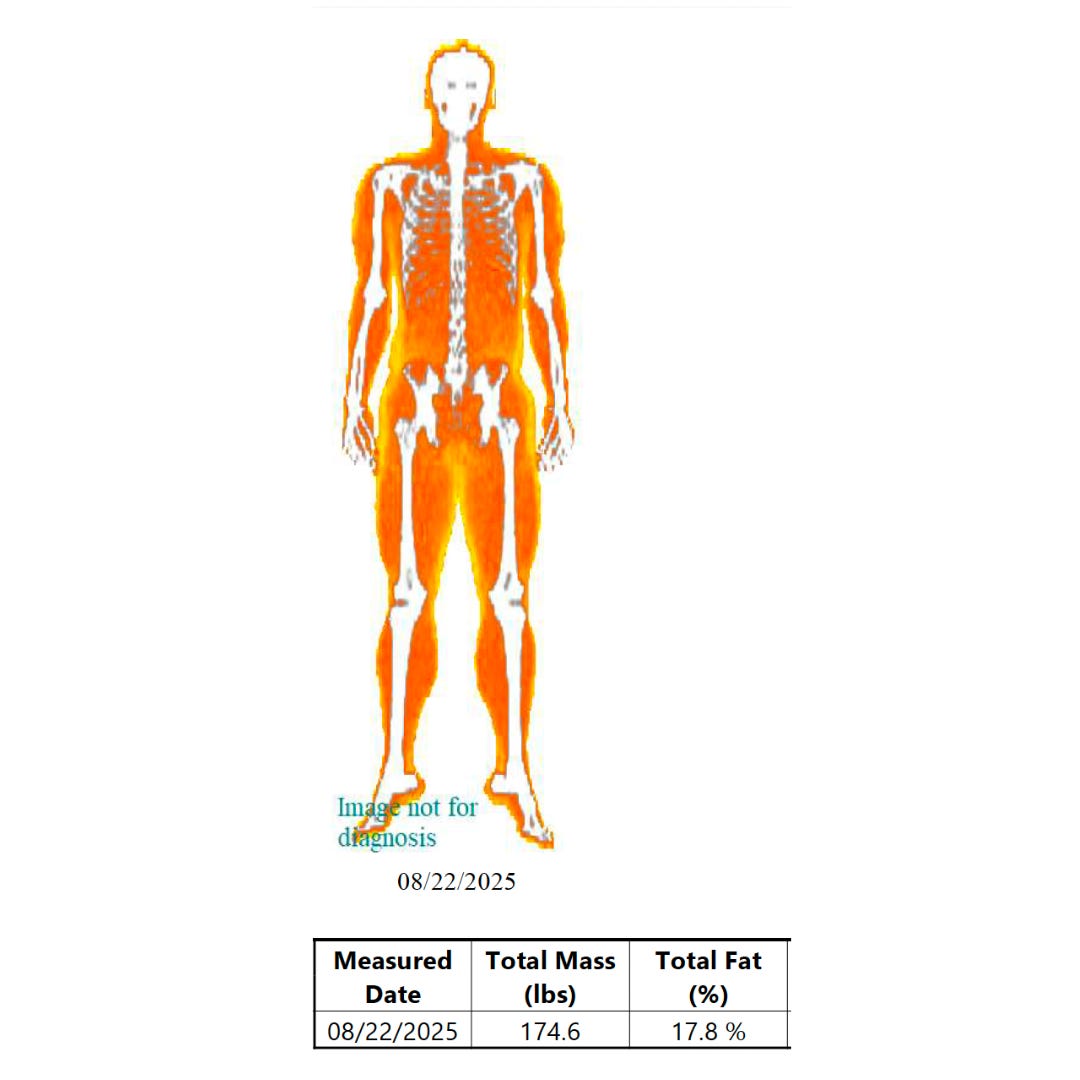
At my current perceived leanness, InBody would have me in the 10-12% body fat range. The DEXA has me at 17.8%! That was a hit to the ego, not gonna lie.
What's the difference?
DEXA: It uses two low-dose X-ray beams to directly measure how much of your body is bone, fat, and lean tissue. It's considered the gold standard for body composition. It doesn’t just estimate—it measures tissue density. Variability is very low from scan to scan. It can estimate visceral adipose tissue (VAT)—the fat around your organs—which is far more predictive of health risks than just total body fat. Your results are not significantly affected by hydration, food intake, or time of day. It's best for medical monitoring, research, athletes, and anyone serious about tracking long-term changes with high accuracy.
InBody/BioImpedance: This sends a small electrical current through your body and estimates body composition based on how easily the current passes through different tissues (fat, muscle, water). It's more prone to fluctuations based on hydration status, recent meals, exercise, and even skin temperature. Accuracy can vary widely between machines and settings. It gives a whole-body estimate, and while some models give segmental analysis, it’s less precise and more assumption-driven. It cannot measure visceral fat directly; it only provides an estimate of total body fat percentage. It is convenient, quick, and useful for general trends in gyms or clinics—but better for tracking direction than for exact numbers.
With that said, because one option is better doesn't mean the other is invalid. Because I like the DEXA better, it doesn't mean I hate the InBody. If you're used to the InBody, just don't be surprised if the DEXA thinks you're a little more fluffy.
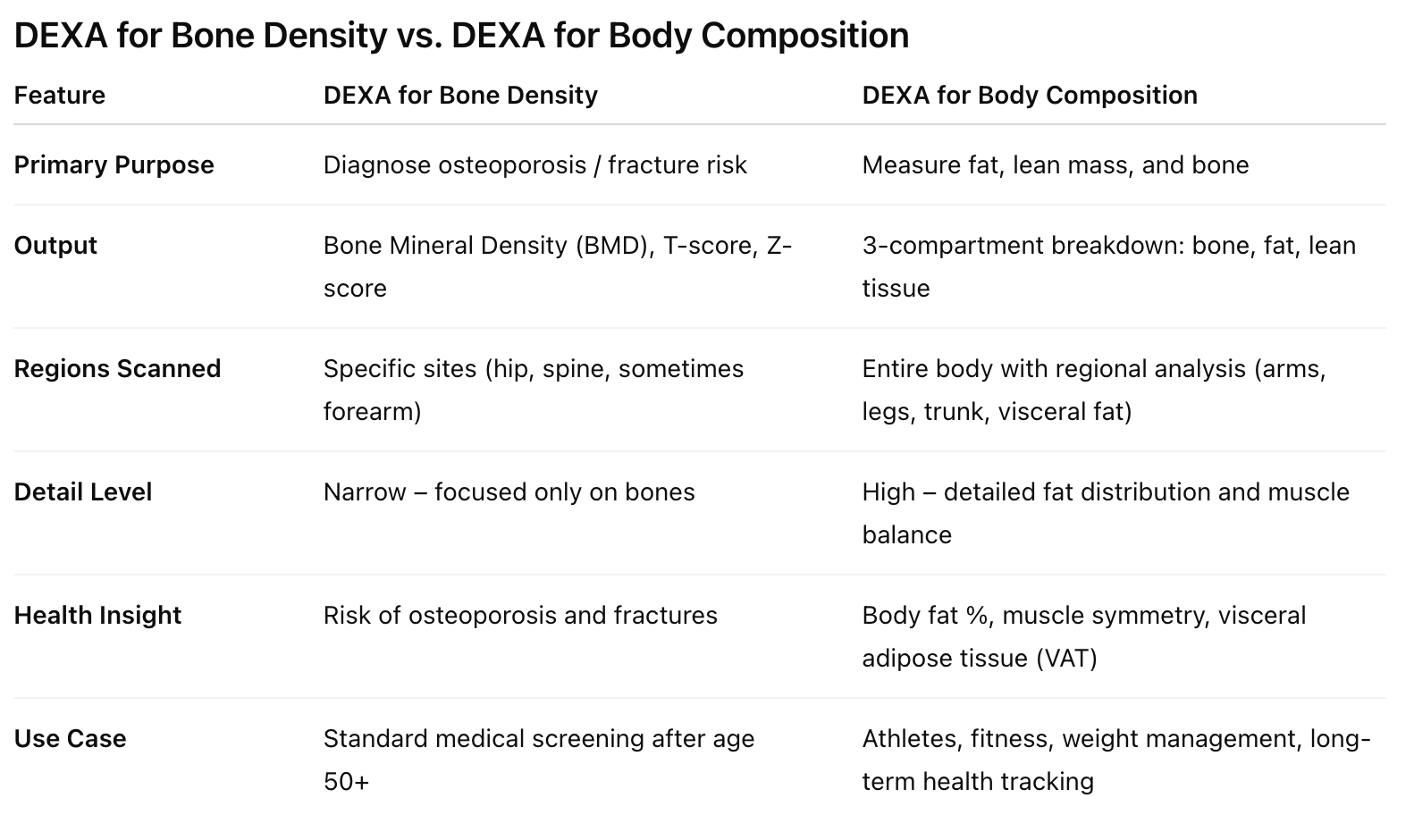
DEXA IS NOT JUST FOR BONE DENSITY
What's the difference? Both analyses use the same X-ray technology. It's the software and algorithms that differ.
"BE THE RESEARCH" SEEMS TO BE WORKING
I have an inherent desire to make sure I look, feel, and function in a manner that visually represents "being healthy." I want people to hear my recommendations and be like, "That guy probably knows what he's talking about because he's living it." I can't tell you how many of my colleagues have that disconnect between recommending lifestyle interventions, but they aren't confident in those recommendations because they don't have the personal social proof to go along with it.
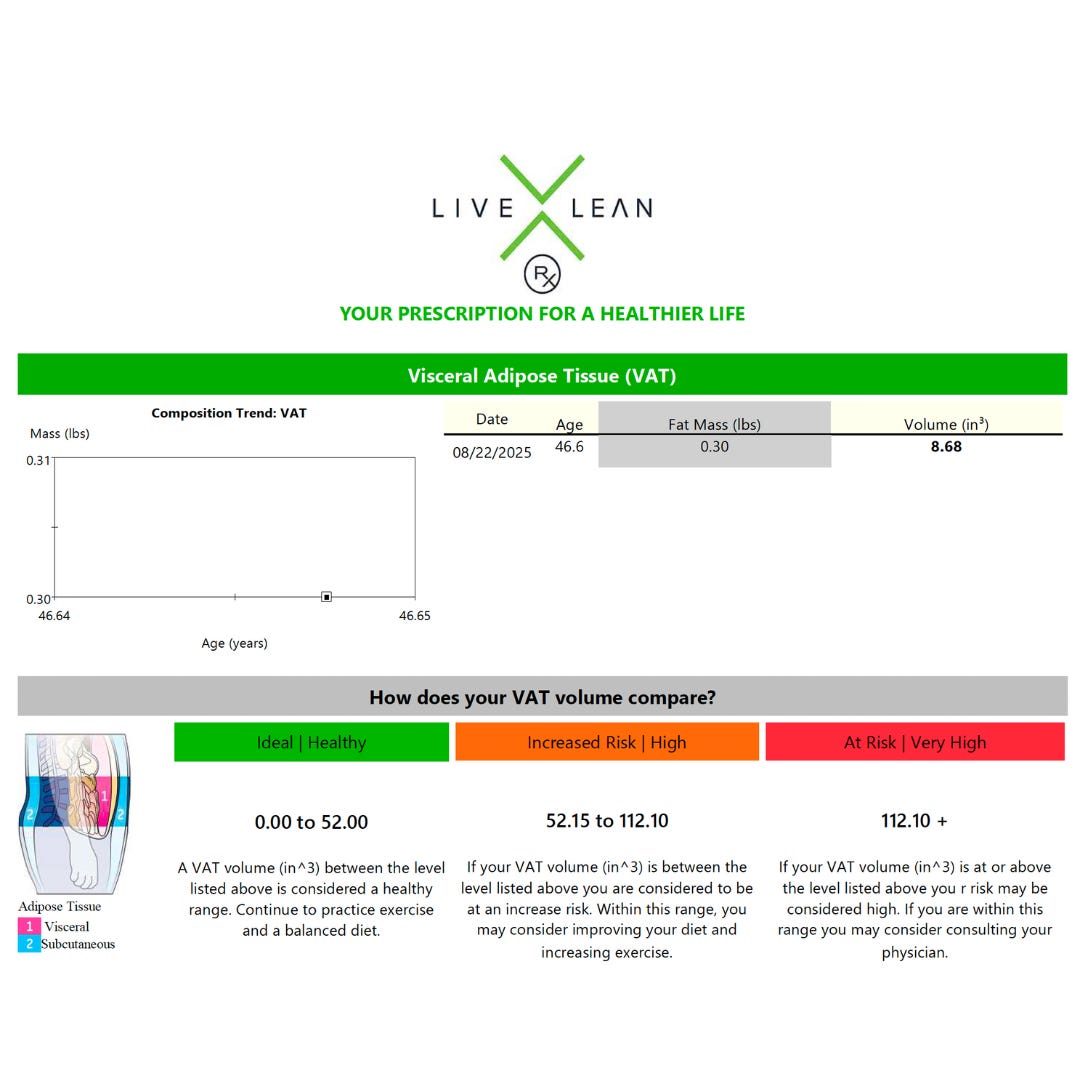
While my VAT (Visceral Adipose Tissue) score isn't perfect, it's closer to zero than it is in the top range of "ideal." That's a win for me, especially at 46 years old. I'll keep working on it.
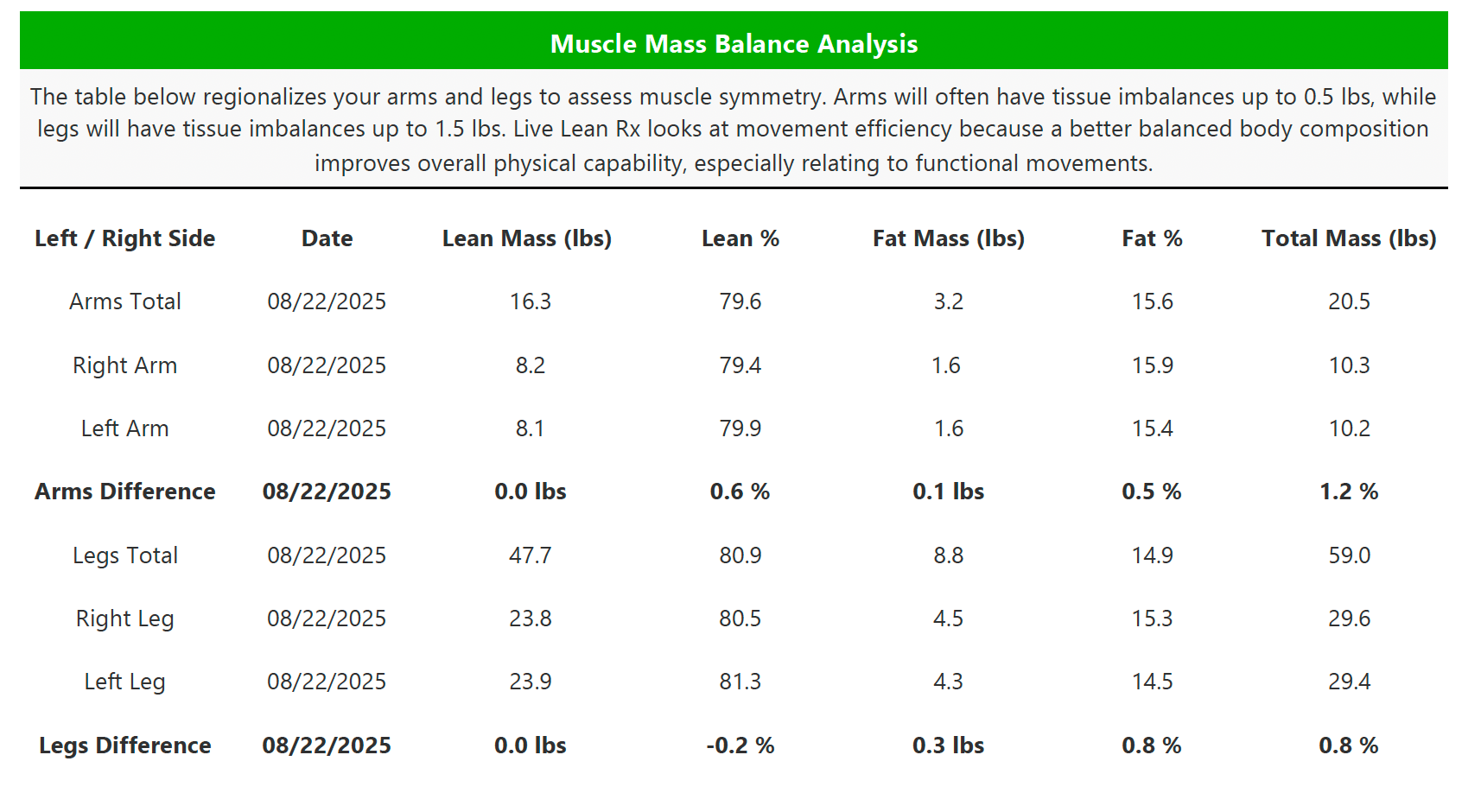
Another major win for me is that the difference in symmetry between my right side and left side arms and legs is essentially zero. If there were major differences, that would leave me exposed to major injuries.
I already went through that in my early 20s with a blown-out ACL, MCL, and meniscus on my left knee from a non-contact injury. As I play sports with my boys, it is encouraging that I have some built-in resilience. Doesn't mean I'm invincible, but how many are blaming "age" for chronic pain/injury when it could easily be more of a muscle mass imbalance?