
Cholesterol: Timing of Testing Matters
Wisdom Ignored from a 1958 Study

A 1958 study was titled 'Changes in the Serum Cholesterol and Blood Clotting Time in Men Subjected to Cyclic Variation of Occupational Stress.' It is published in the journal Circulation by the American Heart Association. The intro to the study states the following:
Accountants were selectively chosen as a self-controlled group for studying effects of cyclic occupational stress upon serum cholesterol and blood clotting time, since their routine work schedule is interrupted by urgent tax deadlines, associated with severe occupational stress. Forty male accountants (age 28 to 56) were bled biweekly for serum cholesterol and monthly for blood clotting time from January to June 1957. Complete records also were kept of weight, exercise, diet, relative work load, and any exposure to unusual avocational stress. When studied individually, each subject's highest serum cholesterol consistently occurred during severe occupational or other stress, and his lowest at times of minimal stress. The results could not be ascribed to any changes of weight, exercise, or diet. Marked acceleration of blood clotting time consistently occurred at the time of maximum occupational stress, in contrast to normal blood clotting during periods of respite. The possible implications of these results are discussed in relation to the problem of clinical coronary artery disease.
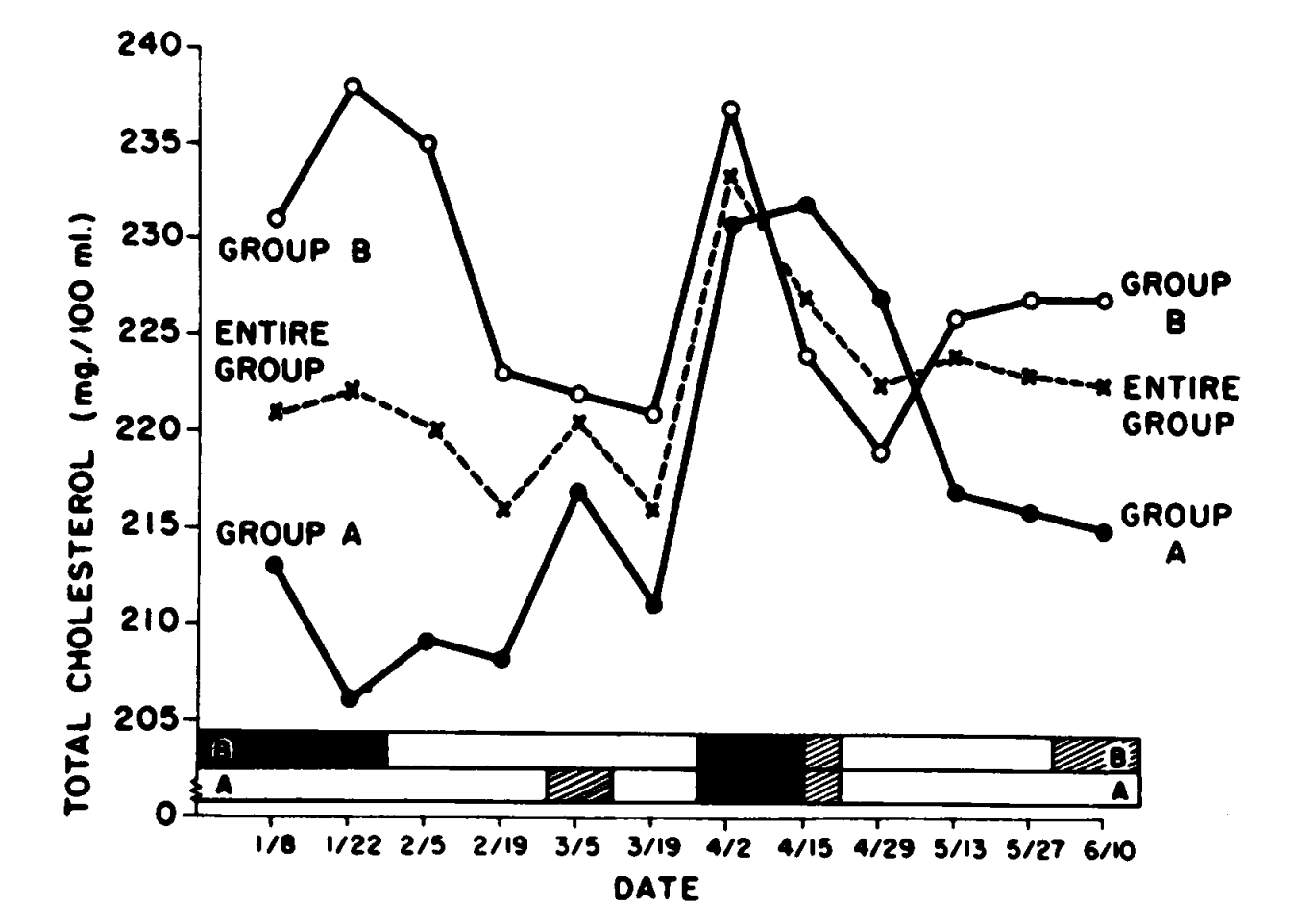
In the chart above, group A are “tax” accountants. Group B is made up of “corporate” accountants. These are plots of cholesterol levels tested in 2-week intervals from January to June. Of particular interest is that the corporate accountants had higher cholesterol levels and a higher reported stress level in January than in April. But overall, it's evident the spike in cholesterol correlates with the April 15 tax deadline.
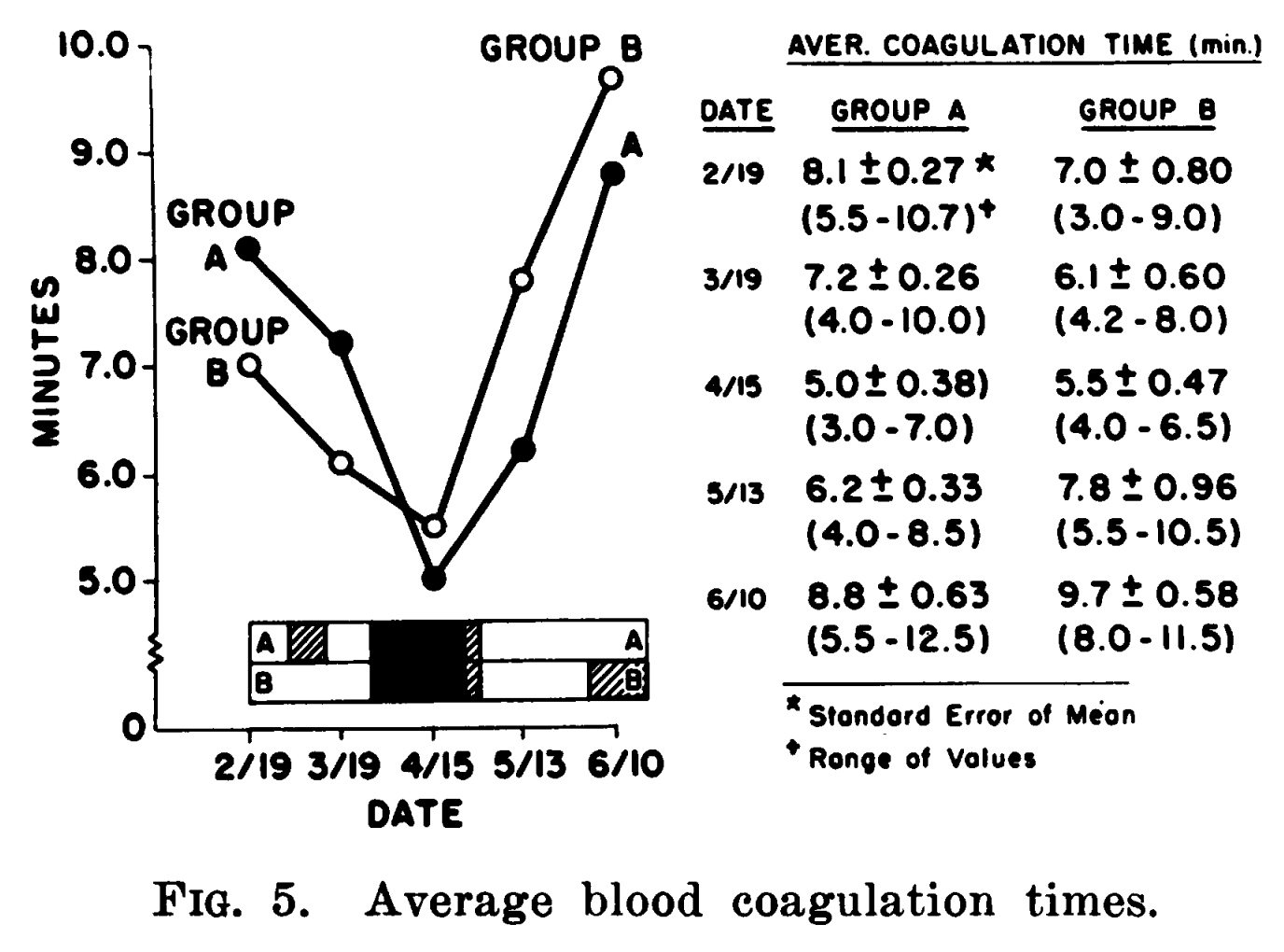
In the immediate chart above, the groups are categorized as the same as in the first chart. This one is testing how fast blood coagulates (clots) in monthly intervals. The faster your blood clots, the more stagnant your blood is, and risks for elevated blood pressure, clots, and strokes increase. Again, look how much faster this occurs at the peak of tax deadlines (highest stress levels) for these accountants. Also notice that for both groups, when the high-demand deadline is removed, cholesterol levels dip and blood clotting normalizes.
PATHOLOGY OR PHYSIOLOGY
This study reminds me of the documentary 'Supersize Me.' The main character decides to eat at the golden arches every meal of every day for 30 days. If he is asked to 'super size' his meal, he has to say yes. He also has to try every item on the menu at least once. Prior to this experiment, he gets a full checkup with labs and body composition, etc. He also had to limit is daily physical activity drastically.
About 2/3 into the experiment, the dude is feeling like complete garbage. His energy is shot, his sex drive is in the tank, his mental clarity is fading and when labs were run, his liver enzymes were off the charts. The doc he was working with told him to stop the experiment immediately since he knew the direct cause.
Had the main guy gone into any other insurance-based, traditionally trained doctor, he would have probably left the office with 3-5 prescriptions instead of having a conversation about his lifestyle choices that were damaging his health.
Imagine these accountants, especially the tax accountants, going to their doctor every year in January when their stress levels were lowest. The yearly tests would all come back normal and glowingly positive. Imagine this happened for 10 straight years and then on year 11, the tax accountant goes in for his yearly checkup on April 2. The provider would look at those results and freak because “he had been so healthy” the previous 10 years.
The accountant's height, weight, eating, and exercise regime haven't changed. Since there's no glaring event that would spike cholesterol, it gets blamed on genetics. “Here, take Lipitor, baby Aspirin, and some Lisinopril...for the rest of your life.”
WHAT’S THE POINT?
With lab testing, there are many values where timing matters before the test. Some markers are sensitive to acute changes. Let’s say you’re deathly afraid of needles. What do you think will happen to your blood sugars? They will probably spike a bit. This doesn’t mean you have diabetes. It means you’re looking at an intelligent response to an external stimulus. It’s called physiology.
Cholesterol is one of those sensitive markers. Did you exercise hard the day before? Are you under immense stress? Did you have a fatty meal with a sluggish gall bladder? There are many variables that will shift cholesterol levels. Unless you have routine, consistent, serial readings, one test for cholesterol isn’t telling the whole picture.